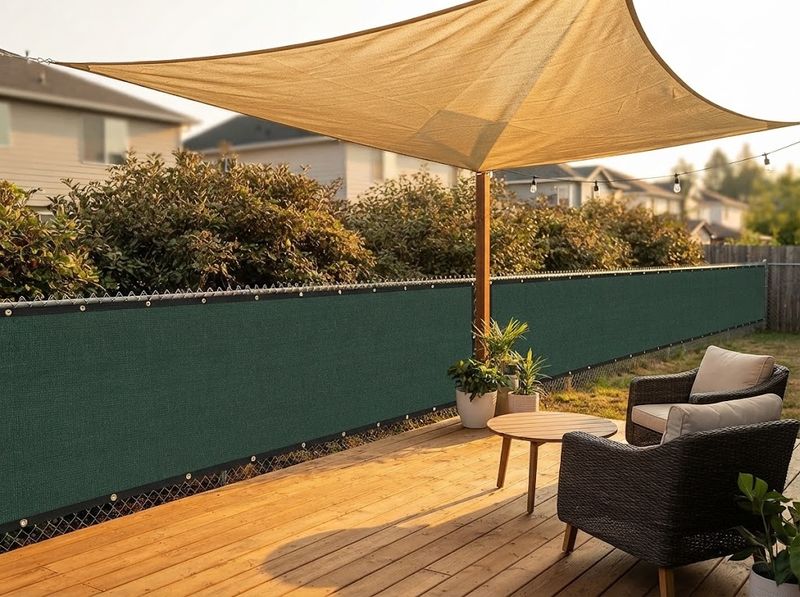
Tired of the neighbors' clear view onto your patio? INFRANGE mesh privacy screens block 90% of that sightline, held to a 4.5-star average across 2,486 verified reviews.
What an Outdoor Mesh Privacy Screen Changes on a Chain-Link Fence
Owners notice the difference within one afternoon of hanging the mesh: the heavier weave, the grommet row, and the 3-year warranty each change something specific on a bare chain-link line.
01
Pull the Neighbor's View Off Your Patio
Hang the mesh along the fence rail before Saturday's cookout, and 90% of the sightline is gone before the first guest arrives.
02
Brass Grommets Bracing Each Corner in a Triangle
Thread a tie through every grommet along the top rail and the screen holds flat through a gusty March week, with no flapping corner.
03
Skip the Post-Hole Digger Entirely
Drive the iron-pole kit's ground stakes into soil on a Sunday morning and 18 feet of temporary boundary stands by lunch.
04
Measured at 95% UV Block Over the Deck Chairs
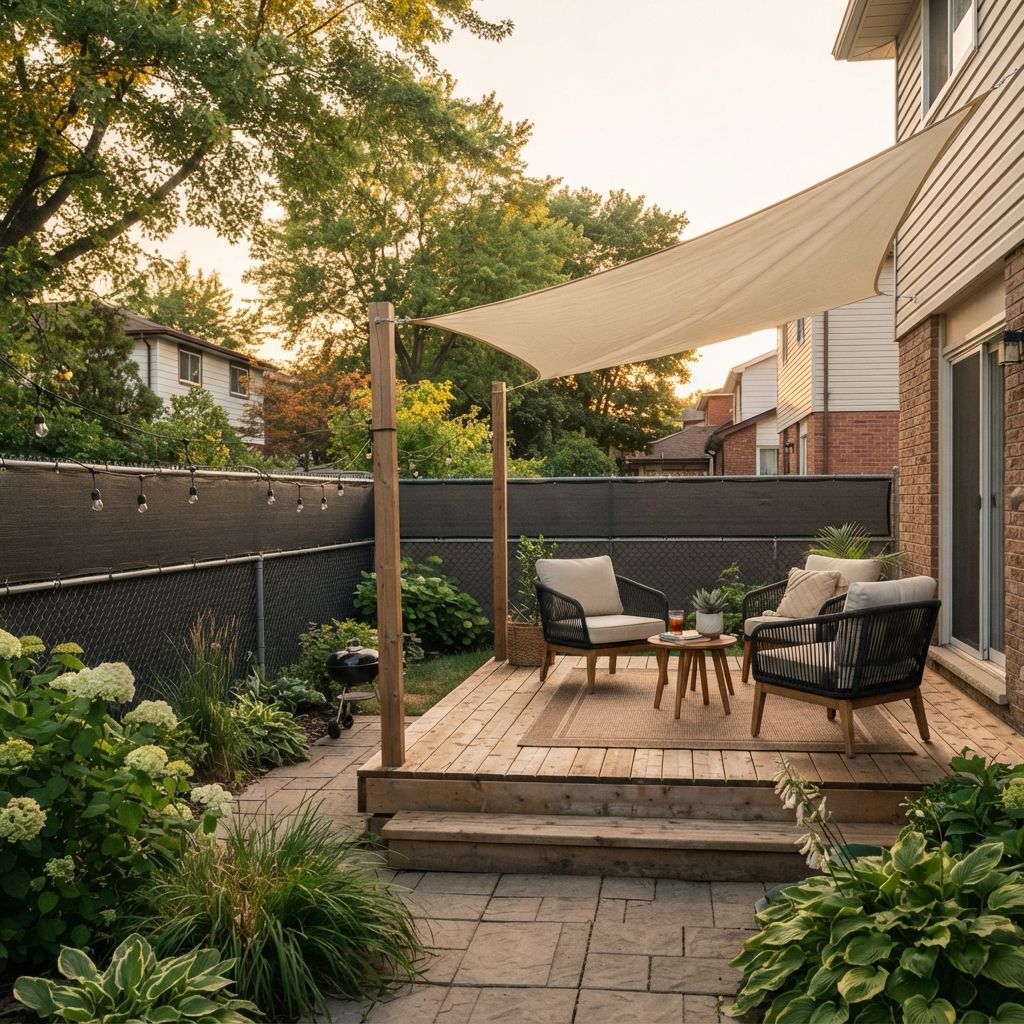
String the 195 GSM sail across the deck and the chair backs stop scorching by 2 p.m., though rain still drips through the weave.
05
Wind Passes Through Instead of Bellying the Fabric
A solid cover catches a gust like a spinnaker. The permeable HDPE weave vents it, so the fence posts stay plumb after a storm.
06
Three Years of Coverage, Not the Import Standard One
Report a torn seam or a failed grommet inside the three-year coverage window on core screens and sails, and a replacement ships without a re-buy.
Match a screen to your fence line
Mesh screens for the fence line, sails and pergola covers overhead, vinyl pickets and a freestanding kit for open ground: every INFRANGE size in one place.
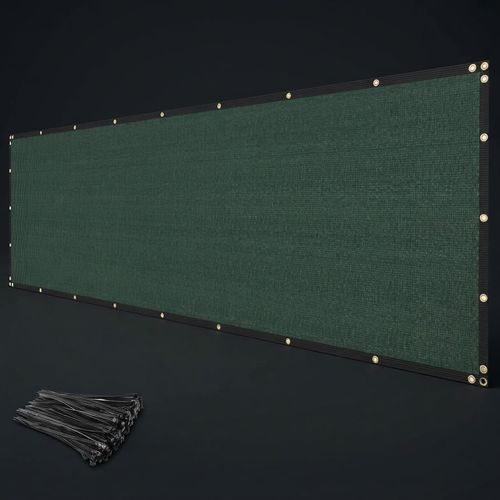
Privacy Fence Screen 6 x 20 ft, Green Mesh
★ 4.6 (337 reviews)
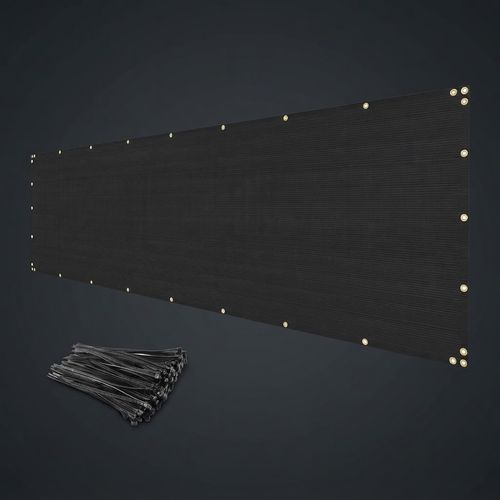
Zip-tie 20 feet of 175 GSM mesh along a chain-link run on a Saturday morning, and the patio stops being visible from the neighbor's deck by lunch, with 90% of the sightline gone at just under 4 pounds of fabric. Brass grommets sit a foot apart down the verticals and two feet across the horizontals, with a 3-grommet triangle at every corner, so a gust pulls against dozens of ties rather than four. Where an unbound budget screen frays at the hem by August, the reinforced 1.5-inch binding wraps the cut edge and holds. Backed by a 3-year limited warranty and rated 4.6 stars across 337 verified reviews.
20 feet of chain-link disappears behind 175 GSM mesh in one afternoon, 90% of the sightline blocked
Brass grommets every foot spread wind load across dozens of zip ties instead of four corners
3-year limited warranty against weather and normal-use damage
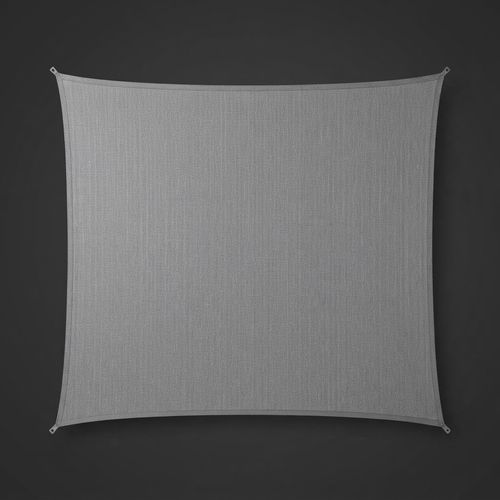
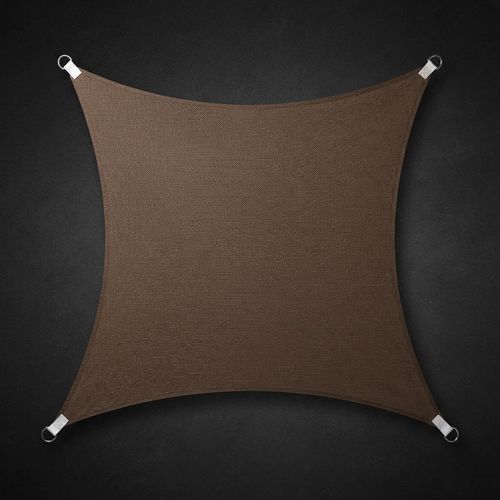
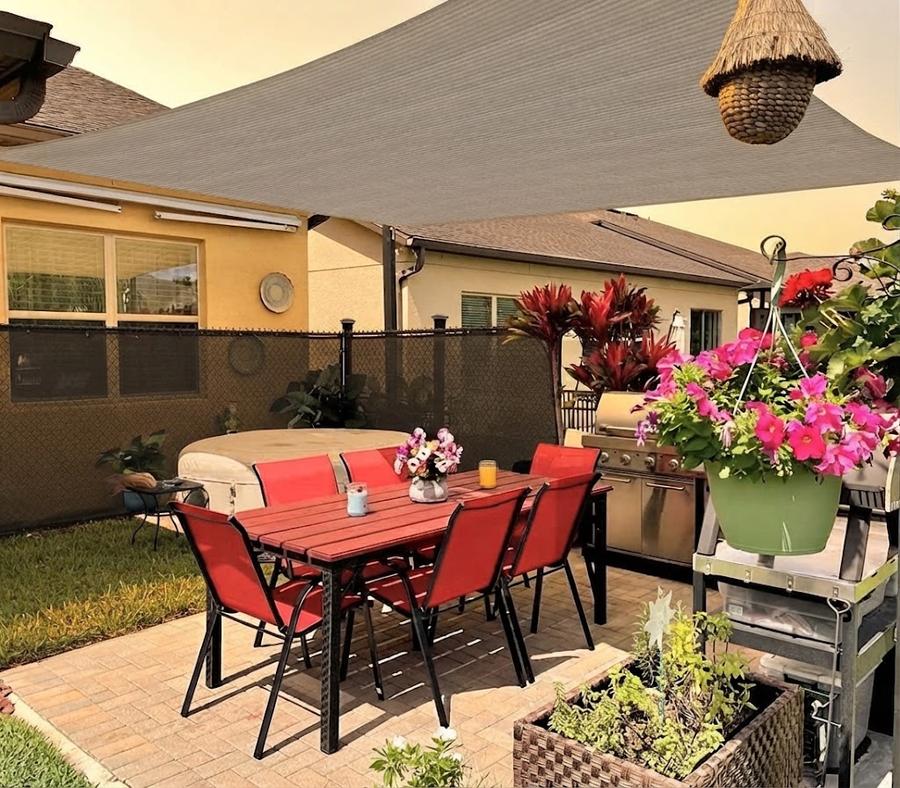
String 195 GSM HDPE across a deck between the house wall and two posts, and by 2 p.m. the chairs underneath stop scorching, because up to 95% of the UV stops at the fabric. Each corner carries a stitched D-ring, and the curved edges pull the sail taut instead of letting the middle droop as the fabric takes up its 10% stretch. Where a solid canopy traps heat and pools rain, this weave vents both, and it carries a Not Water Resistant rating on purpose. The free 19-foot PE rope ships in the box, under a 3-year limited warranty. Rated 4.5 stars across 256 verified reviews.
A 12' x 14' span shades a deck by 2 p.m. with up to 95% of UV stopped at the fabric
Curved edges hold tension as the fabric takes up its 10% stretch, so the middle never droops
Vents heat and rain where a solid canopy traps both under the beams
Fifty feet of 175 GSM mesh covers a full side yard in one run, so no seam lands where the neighbor's kitchen window looks in. At 4 feet tall it sits below most fence tops while blocking 90% of the sightline across the whole span, and brass grommets spaced a foot down the verticals take the wind pull along the entire edge rather than at a few corners. Where a screen ordered in short lengths leaves a gapping joint every 20 feet, this run has none. The best-reviewed screen in the range at 4.6 stars across 565 verified reviews, with a 3-year limited warranty behind it.
One 50-foot run screens a full side yard with no seam at the neighbor's window
Grommets every foot along all edges spread wind pull across the whole span
4.6 stars across 565 verified reviews, the most-reviewed screen in the range
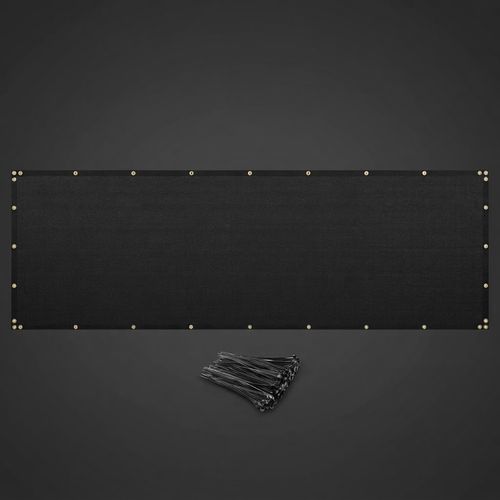
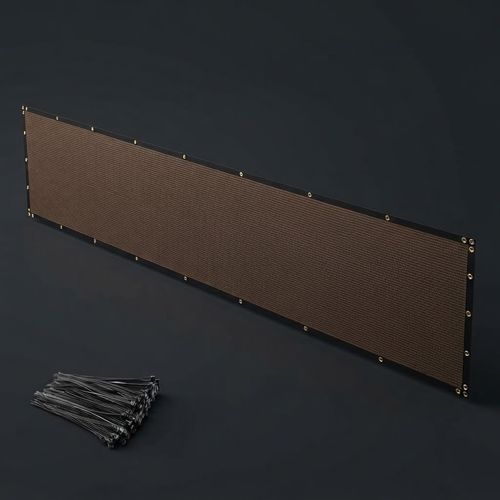
Brown mesh reads closer to cedar than a black panel does, which matters on a fence facing the street. Twenty-three feet of 175 GSM fabric zip-ties along the rail and drops 90% of the sightline at 5 feet of height, tall enough to cover a seated patio without cresting the fence top. The 1.5-inch bound edge wraps every cut line, so a snagged branch pulls a thread instead of opening a tear. Where thin unbound screens fade toward gray by a second August, this weight holds its color. Covered by a 3-year limited warranty and rated 4.5 stars across 305 verified reviews.
23 feet of brown mesh covers a seated patio at 5 feet of height, 90% of the view blocked
The bound black edge wraps each cut line, so a snag pulls thread and not fabric
3-year limited warranty on weather and normal-use damage
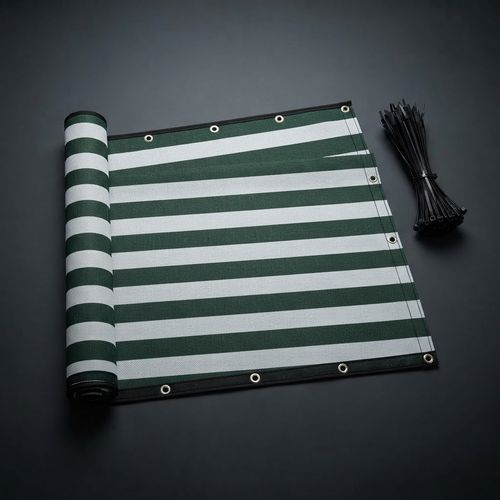
Apartment railings show everything: the chair, the drying rack, whoever is standing at the door. Seventeen feet of 225 GSM HDPE cable-ties along that rail and stops 98% of the sunlight coming through, the heaviest weave in the range. Green and white stripes read as a balcony awning rather than a construction screen, and the brass grommets are embedded rather than punched, so the stitching carries the load. Where a solid panel would kill the airflow on a small balcony, this weave keeps it moving through the afternoon. Cable ties ship in the box. Rated 4.5 stars across 502 verified reviews.
17 feet of balcony railing covered at 225 GSM, with 98% of sunlight stopped
Embedded brass grommets put the load on the stitching rather than a punched hole
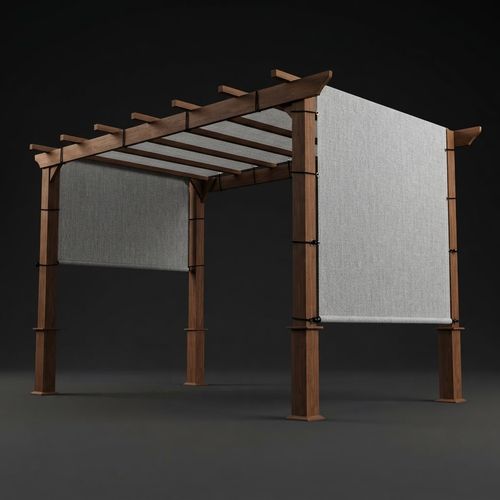
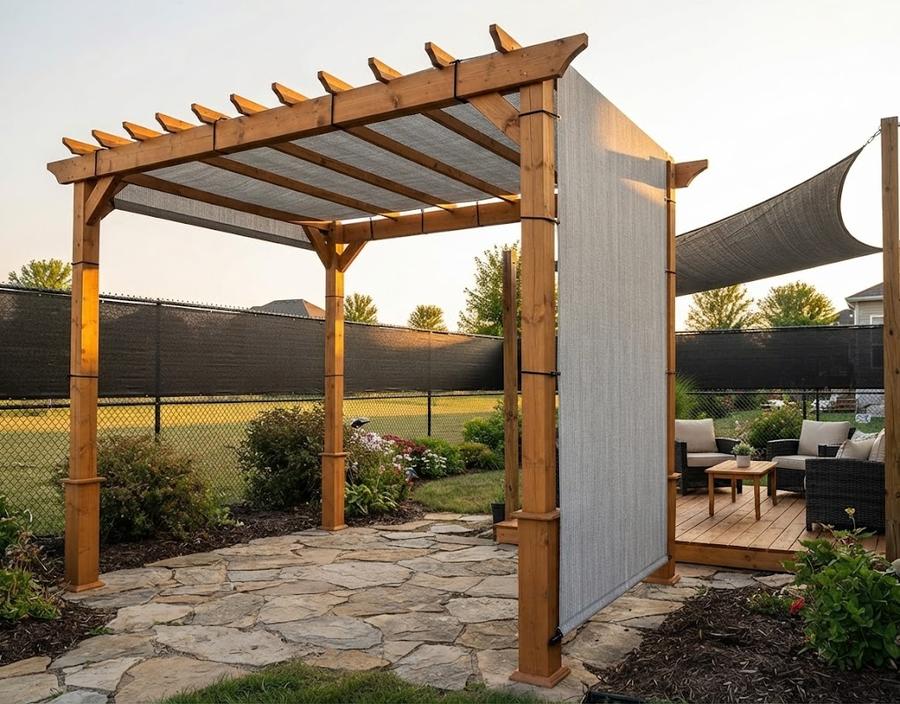
Slide two weighted rods into the tubular end pockets, drop the panel over a pergola frame, and 108 square feet is back in shade the same afternoon. The rods hang the fabric plumb without a single tie along that edge, while grommets down the two long sides take zip ties on a store-bought frame. Where a tarp-style cover pools rainwater in a belly and stays stretched, this 195 GSM weave lets rain and hot air pass straight through, and one owner replaced exactly that failure with this panel. Rust-treated rods and a double-stitched seam ship in the box, with warranty coverage handled through the seller.
108 square feet back under shade the same afternoon on a 9' x 12' pergola frame
Weighted rods in tubular end pockets hang the panel plumb with no ties on that edge
Rain and hot air pass through where a tarp-style cover pools and sags
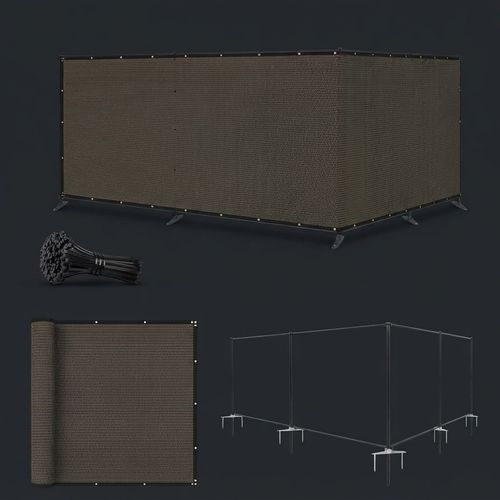
Renters and job sites need a boundary that leaves no post holes behind. Drive the ground stakes and base mounts through the pole feet, thread the polyethylene fabric, and 18 feet of freestanding fence stands on open soil in a morning: no digging, no concrete, nothing to fill back in when the lease ends. Rust-resistant coating on the iron poles keeps the frame from streaking after a wet week. Where a staked tarp fence lifts in the first storm, expansion screws and ground spikes hold this base down. It comes back out at move-out, and it is rated 3.9 stars across 169 verified reviews.
18 feet of freestanding fence goes up in a morning with no post holes dug
Ground stakes, base mounts, and expansion screws hold the pole feet against wind lift
Stays put where a staked tarp fence lifts in the first storm
Eight feet of height is what it takes to screen a second-story window across the property line, and 50 feet of run covers most side yards in one piece. The 175 GSM weave blocks 90% of the sightline over that full height, and brass grommets down all four edges spread the load, which matters more here because a tall panel catches more wind than a short one. Where a low screen leaves the upper half of a fence exposed, this one covers to the top rail of an 8-foot fence. A 3-year limited warranty applies, and it is rated 4.4 stars across 93 verified reviews.
50 feet of run at 8 feet tall screens a second-story sightline in one piece
Triangle-braced corners and full-edge grommets carry the extra wind a tall panel catches
3-year limited warranty against weather and normal-use damage
Corner to corner, a 16-foot triangle covers a seating area a rectangle would miss, because three solid anchor points are easier to find in a yard than four. Run rope through each stitched D-ring, tension until the rippling disappears, and up to 95% of the UV stops overhead. The curved edges pull tight as the fabric takes its 10% stretch, which is what keeps the center from bellying by the second month. Where a straight-cut sail sags within weeks, this one holds its shape. The free 19-foot PE rope ships in the box under a 3-year limited warranty, rated 4.3 stars by verified buyers.
A 16-foot triangle shades a seating area from three anchor points, up to 95% of UV stopped
Curved edges take up the fabric's 10% stretch, so the center never bellies
Holds its shape where a straight-cut sail sags within weeks
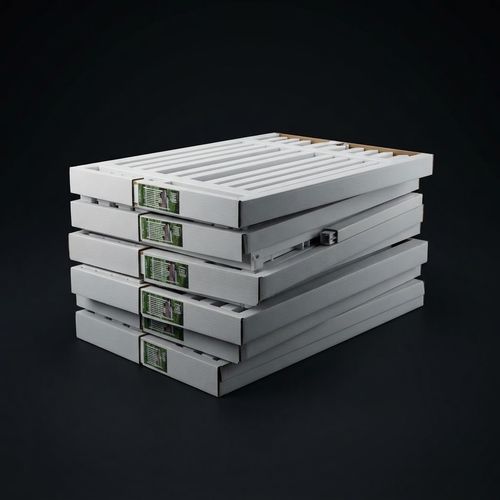
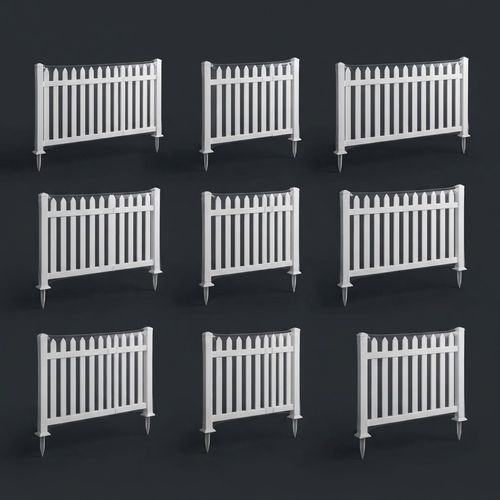
White pickets along a porch border do a different job than mesh: this is a boundary a toddler or a dog reads as a wall, not a see-through screen. Each set pushes into soil or sets on a cement pad, covering 84 inches of run at 38.6 inches tall, and the horizontal picket positions adjust to follow a yard that is not level. Vinyl needs no painting, staining, or sealing after the first season. Where wood pickets swell, split, and gray out, PVC holds white through the weather. Plan on a hand truck at the curb, because each set ships at 124.6 pounds.
84 inches of white picket border per set, pushed into soil or set on a cement pad
Adjustable horizontal picket positions let the run follow uneven ground
Holds white where wood pickets swell, split, and gray out
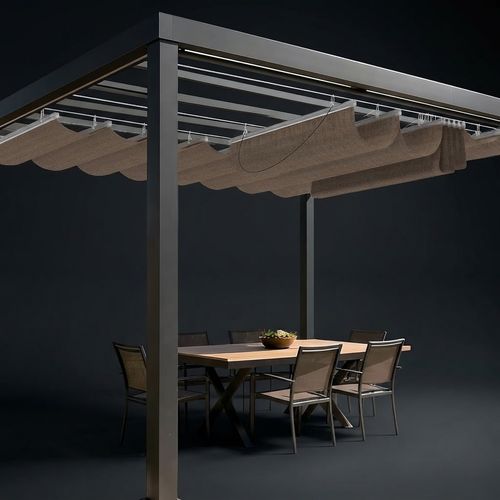
Pull the control tape and the wave panels slide open across the pergola. Pull it back and the sun returns to the patio the same minute. Each rod carries a hole at both ends for a hanger, so the fabric rides on wire cables strung either side of a 16-foot span, with panels sitting 2 feet apart when extended. That retractability is the whole difference from a fixed sail: shade in July, full sun in October, no ladder either way. Where a permanent canopy has to come down for winter, this one gathers to one end. Breathable polyethylene, not a waterproof roof.
A 16-foot pergola run goes from open sky to full shade with one pull of the control tape
Rod-end holes ride hangers on wire cables, so panels slide instead of unhooking
Gathers to one end where a fixed canopy has to come down for winter
Thirty-six inches is the height that marks a border without walling off the view from the porch swing, a few inches shorter than its taller sibling, and that difference shows on a low front yard. Panels push straight into soil or sit on a cement pad, each set running 84 inches wide with adjustable post positions for ground that never came out level. No paint, no stain, no annual sealing: vinyl takes the weather as it comes. Where a wood picket line needs a brush every other spring, this one needs a hose. Each set ships at 124.6 pounds, rated 4.2 stars by verified buyers.
A 36-inch picket line marks the porch border without blocking the view from the swing
Post positions adjust along the run, so the pickets stay level on ground that is not
Needs a hose where a wood picket line needs a brush every other spring
The Yard Jobs These Screens and Sails Were Built Around
Screening a long chain-link run, anchoring a sail to the house wall, refitting a sagging pergola cover, and holding steady through a gusty afternoon.
Turn 50 Feet of Bare Chain-Link Into a Solid-Looking Wall
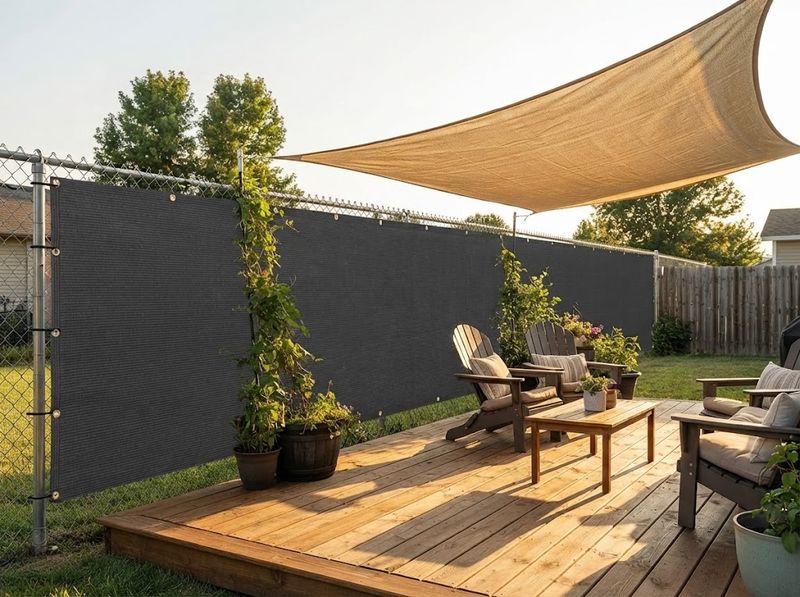
Unroll the 4' x 50' INFRANGE screen down a side yard and it covers the whole run in one piece, so no seam lands where the neighbor's deck looks in. Run your thumb down the vertical edge and you hit a brass grommet every foot, so a March gust spreads over dozens of ties instead of three. Owners who hung this run along a 50-foot property line rate it 4.6 stars across 565 verified reviews.
Thread the first zip tie at the top rail corner and the 3-grommet triangle takes the load before you reach the second post.
Press a finger along the 1.5-inch bound edge and feel the binding wrap the cut line, so a snagged branch pulls thread instead of tearing fabric.
Where an unbound budget screen frays along the hem by August, this one keeps its edge into a second season.
Stretch a 12' x 14' rectangle sail between the house wall and two existing posts over the deck, and no new footing gets dug all weekend. Pull the 19-foot PE rope out of the box on a Saturday morning and it ties a short span, no hardware run needed before lunch. Tension the last corner and the curved edge draws the fabric flat, with no belly forming over the table by August.
Bolt the pad eye into a stud, clip the corner, and the sail carries load in an afternoon with one ladder.
Tug the corner rope hard at install and the stitched D-ring holds, because the curved cut carries the pull along the edge instead of the middle.
Where a flat-cut sail bellies within weeks, the curved cut keeps tension until the fabric's 10% stretch is taken up.
Replace a Sagging Factory Pergola Cover, Same Footprint
One owner swapped a tarp-style pergola cover that pooled water for the 9' x 12' INFRANGE panel, and 108 square feet went back under shade the same weekend. Two rust-treated weighted rods slide into the tubular end pockets, so the panel hangs flat without a frame rebuild. Come back after a June thunderstorm and the 195 GSM weave has drained it, with no puddle sitting in the middle of the panel.
Slide the weighted rod into the end pocket and the panel hangs plumb, with no ties needed along the rod side.
Thread a tie every other foot down both long sides and the panel sits tight on a store-bought frame in twenty minutes.
Sit under the beams at 2 p.m. and hot air keeps rising through this open weave, where a solid vinyl cover would trap it.
Ride Out a Gusty Afternoon Without the Fabric Bellying
Owners on exposed fence lines watch the INFRANGE panel flex through a March squall while the posts behind it stay plumb. Watch a solid tarp fill like a sail in the same gust and drag that line of posts sideways by morning. Press a palm to the fabric mid-gust and the air crosses straight through, which is why these screens and sails carry a Not Water Resistant rating.
Check the fence posts after two storm seasons and they sit where you set them, with no lean toward the yard.
Stand behind the panel on a still August afternoon and air keeps moving through, so the patio never turns into a hot pocket.
Where a waterproof cover pools rainwater in a low spot by the second week, this 175 GSM weave drains it onto the patio within the hour.
Buyers who tied the mesh to their own rails describe the same afternoon: the run goes up before dinner, and the first storm settles the question.
Fifty feet of chain-link along the driveway, and every neighbor walking a dog looked straight into the kitchen window. I unrolled the whole run on a Sunday and had it tied off before the game started. The grommets sit close enough that I used almost the entire bag of ties, which is exactly what you want when March comes through. Two springs later the black still reads black. Rain goes straight through it, which I expected, and honestly prefer to a tarp holding a puddle over the walkway.
Anchored one corner to the house wall and two to pergola posts I already had. The rope in the box got me through the short span, though I added a turnbuckle on the long corner because I wanted it drum tight. By two in the afternoon the deck chairs are usable again. Docking a star only because the corner hardware is not included, and I found that out after the box was already open.
★★★★★Marcus T.Verified Purchase · Rectangle Sun Shade Sail
Third-floor balcony facing another building. The green and white stripe reads as an awning instead of a job site, which matters when the HOA is looking. Cable ties came in the box and the whole railing took under an hour. Air still moves through it on hot evenings, so the balcony never turns into an oven the way a solid panel would.
The neighbor's second story looks down into the pool, so eight feet was the only height that worked. It went up in an afternoon with two people and a step ladder. One thing to plan for: a tall panel catches far more wind than a short one, so put a tie in every grommet and skip none of them. Mine has held through two storm seasons with the posts still plumb.
We rent, so digging was off the table. The stakes and base mounts went into the lawn in a morning and the run stood on its own. It is not a permanent fence and it does not pretend to be. On soft ground after a week of rain I had to reset two of the pole feet. As a dog run boundary that comes back out at move-out, it does the job.
Replaced the factory canopy that pooled water every storm and finally split along the seam. The weighted rods slid into the pockets and the panel hung flat with no ties on that edge. Same footprint, no changes to the frame. Water runs through the weave now instead of collecting in the middle, and hot air rises out from under the beams instead of sitting on the table.
I wanted the porch border to read as a fence, not a screen, and this is the product for that. The sets pushed into the soil along the walk, and I set two of them on the cement pad by the steps. Adjusting the horizontal positions saved me on a yard that slopes. Heads up on the weight: get help at the curb, because these are not a one-person carry.
Three anchor points were all I could find in this yard, so a triangle was the only option. I tensioned it through the D-rings with the rope until the ripple went out of the fabric. There is stretch in it, so plan on retightening once after the first week and then leaving it alone. Shade over the seating area from noon on. It is not a rain cover, and the listing says so.
★★★★★Jerome W.Verified Purchase · Triangle Sun Shade Sail
The Numbers Other Fence-Screen Listings Skip
Compare the warranty term and the privacy percentage before you order, because INFRANGE publishes both where most listings stay vague.
3-year limited warranty
Mount the mesh along the fence line in April and the warranty still covers weather and normal-use damage three summers later, on core screens and sails.
Most import screens quote a one-year replacement term, so you rebuy in summer two; this one covers three summers of UV and wind.
Manufacturer warranty terms, core screen and sail products
4.5 stars across 2,486 verified reviews
Owners who hung these screens to chain-link runs and strung sails over pergola beams hold the range at a 4.5-star weighted average across 2,486 verified reviews.
Scroll the ratings on comparable outdoor screens and most slide after a second season, while this range holds through the third.
2,486 verified buyer reviews across all listings
12 in vertical / 24 in horizontal grommet spacing
Count the grommets before you buy: one every foot down the verticals, one every two feet across, and a triangle bracing each corner.
Read a competing mesh description and it stops at the word 'grommets', so you measure the spacing only after the box arrives.
Manufacturer spec
98% sunlight block
Hang the 225 GSM balcony panel along an apartment railing and it stops 98% of the sunlight coming through, so a neighbor leaning over the shared rail reads a shadow instead of a scene.
Privacy claims in this category cluster at 90-95%, so a neighbor still reads movement at dusk; the heavier weave pushes past that ceiling.
Manufacturer spec, 225 GSM balcony panel
19 ft of PE rope included
Cut the tape on the sail box and the 19-foot PE rope is already inside, so tensioning the corners never waits on a Saturday hardware run.
Order a competing sail and the tensioning line comes separately, so the fabric sits in its box until the next hardware run.
Manufacturer spec, rectangle and triangle sails
no post-hole digging
Drive the stakes and base mounts straight into soil and the freestanding iron-pole kit stands 18 feet on its own, so a rental yard gets a boundary without digging.
Follow a standard privacy-fence guide and you dig post holes and mix concrete across a whole weekend, where the stake-and-mount base skips both.
Manufacturer spec, freestanding iron-pole kit
The Backyard Privacy Screen and Patio Shade Cover, From One Brand
You bought the house, not the audience. Run a 175 GSM mesh screen along the chain-link and the patio stops being a stage. Zip ties thread through brass grommets, so no post-holes and no contractor. Need shade instead? The 195 GSM sails cut up to 95% of UV while air keeps crossing the weave. Screens for the fence line, sails overhead, one brand.
Hang an INFRANGE mesh screen on your fence line and a March gust crosses the weave instead of dragging the posts sideways, because every screen and sail passes air and water. Not one of them is waterproof, and that trade is the whole design. You strung a tarp there last summer, and August left pooled water, a sagging middle, torn corners.
Hang the mesh instead and the same storm drips through to the deck boards while your posts stay plumb. Zip-tie the screen to standard chain-link through brass grommets, matching ordinary post runs. Clip the sail's D-rings to two posts and a structurally sound house wall, and the deck has shade by dinner.
Watch your side yard go from bare rail to 90% blocked in the length of one afternoon, and the 3-year limited warranty on core screens and sails outlasts the one-year terms stamped on most import listings.
Check the rating before you order: the mesh screens and sails ship Not Water Resistant, so a July downpour comes straight through the weave. Push the solid vinyl pickets into soil along a porch edge if you want a physical barrier instead of a sightline block.
From Bare Rail to Screened Patio Without Power Tools
INFRANGE covers 3 install paths, one afternoon each: clip mesh onto an existing fence, tension a sail overhead, or stake a freestanding kit into bare soil.
1
Unroll Along the Rail
Unfold the screen against the chain-link and line the grommet row up with the top rail inside the first minute.
2
Zip-Tie the Grommets
Thread a zip tie through each grommet, top edge first then down both sides, roughly two dozen ties on a 20-foot run.
3
Tension the Sail Corners
Clip rope through each D-ring corner and pull until the rippling stops; sails stretch up to 10%.
4
Stake the Freestanding Kit
Drive the stakes and base mounts through the pole feet into soil, and the boundary stands before lunch with no digging and no concrete.
One Configuration to Start With
Read one consultant's case for why a leaky weave outlasts a solid barrier, and which screen to order first on a long fence run.
ME
Marcus Ellery
Outdoor Living & Landscape Consultant
Homeowners walk in asking for the thickest fabric on the shelf, and that instinct costs them fence posts by March. Hang a solid barrier and you turn your fence into a sail, so the posts take every pound of the first spring gust. Swap in a permeable weave at the same fabric weight and the pressure bleeds through, with 90% of the sightline still gone. Check the grommet spacing before the fabric weight, then walk your fence with a tape on a Saturday and mark each tie point before the box arrives.
Expert perspective, composite view reflecting industry practice. Individual experiences vary.
Three checks before the box arrives
Run a tape along your post spacing before you order, because a gap wider than standard chain-link needs cross-bracing first.
Angle the sail so one corner sits a hand's width lower, and the first storm runs off instead of settling into a low spot.
Start with a core screen or sail rather than the pergola panel if warranty length matters, since the 3-year limited term applies there and the retailer's return window still covers a wrong size before you cut a tie.
Where to start
The heavy-duty side-yard privacy screen
The rectangle sun shade sail
Day 1 to Year Three on the Same Fence Line
The first afternoon closes the sightline down the fence line, the first month tests every grommet, and year 3 is where the warranty term stops mattering to most owners.
Day 1
Unfold the screen against the chain-link after work and zip-tie the top edge first. Ninety percent of the sightline is gone before dinner, and the retailer's standard return window still covers a wrong size or color if the run measures short.
Week 1
The first storm arrives and the panel flexes instead of drumming. Where a solid cover would have pooled water in the middle by now, the open weave drips it through onto the grass.
Month 1
Wind has worked on every tie for four weeks and the grommet row has not stretched. Walk the fence line once, retighten two ties, and the screen is done asking for attention.
Year 1 and beyond
Three summers of UV later, the weave still reads black rather than chalk gray, and the limited warranty on core screens and sails is still running behind it.
Ready for Day 1? Pick the run length that matches your fence line, then check today's price.
Who Ends Up Buying a Mesh Screen
Zip-tie a screen across 20 feet of bare rail, stake one into a rental lawn, or clip a sail over a deck that bakes at 2 p.m.
The Patio Owner Whose Rail Runs 20 Feet of Bare Chain-Link
Stand at your patio table and the chain-link hides nothing above the bottom rail, right where the property line runs. Tie a 6' x 20' screen across that run in an afternoon and the table drops out of the neighbor's sightline.
The Renter Setting a Yard Boundary Before the Lease Ends
Read the lease clause banning digging, and the June deposit rides on handing the yard back unmarked. Drive the iron-pole kit's stakes into soil for an 18-foot boundary, then pull the whole run back out on move-out day.
The Deck Owner Chasing Shade Past 2 p.m. Without Losing the Breeze
You righted that umbrella twice last August, and the solid awning trapped heat underneath by noon. Clip a rectangle sail to two posts and the house wall, and up to 95% of the UV stops overhead while air keeps crossing the boards.
The Gazebo Owner Replacing a Sagging Factory Pergola Cover
You pulled that gazebo canopy tight every spring, and it still pooled water and stretched out of shape. Slide the 9' x 12' replacement panel onto its weighted rods and 108 square feet goes back under cover in a morning, frame untouched.
Where a mesh screen is the wrong buy
Not a fit if you need a waterproof rain barrier: the mesh screens and shade sails carry a Not Water Resistant rating by design, and only the solid vinyl picket panels form a physical barrier.
Skip the mesh screens if your fence posts sit farther apart than standard chain-link spacing without cross-bracing, because the 12-and-24 grommet pattern assumes a standard run.
What Goes Wrong With Cheap Fence Screens
Owners describe the same 5 failures on budget screens: torn grommets, a bellied cover, a bare pool fence, a scorched deck, and no coverage left after month 12.
Every Glance From Next Door Lands on Your Patio
90% sightline block at 175 GSM
Neighbors read your Saturday dinner straight through the chain-link. Fasten the mesh through the grommet row along the top rail and the sightline drops by 90% before the first guest arrives. Sit down at that same table on a Saturday evening and you still hear the kids next door, because the weave blocks the view rather than the air.
Six Weeks In, the Tarp Cover Sags and Pools
Push up on the middle of a solid cover after six weeks of rain and the belly stays put. Water pools in that same low spot by the second storm, and the seams stretch a little further each time. Walk out after that storm and the permeable HDPE weave has dripped it onto the deck boards, with no belly forming overhead.
By 2 p.m. the Deck Is Too Hot to Sit On
up to 95% UV blocked
Step barefoot onto the deck boards at 3 p.m. and they hold heat against your soles until sundown. String a 195 GSM sail over the seating area and up to 95% of the UV stops at the fabric, so the chair backs stay touchable through the afternoon. Leave a cushion out through an afternoon storm and it soaks, because these sails cut sun rather than water.
Toss the Screen That Ripped Loose in One Windy Season
4.5 stars, 2,486 verified reviews
One windy March is where budget screens fail, and it usually starts at a grommet. Cut one tie loose in a gale and the corner triangle still carries the panel, because the pull never landed on a single grommet.
What Happens When a Grommet Tears Out Mid-Season
3-year limited warranty, core screens and sails
A grommet torn in year one means buying the same screen twice. File a claim in year three and the limited warranty still covers weather and normal-use damage, while the retailer's return window covers a wrong size before you cut a tie. Send your order details on Monday and a replacement panel ships without a second purchase.
Three-year limited warranty plus the retailer's return window: pick a size and compare the specs side by side.
The screens and sails in place, not on a white background
Mesh along a chain-link run, a sail tensioned over a deck, pickets pushed into a porch border.
Will zip ties hold a screen through March?
Grommet spacing, fabric weight, warranty terms and what the Not Water Resistant rating actually means on a mesh screen.
What is an INFRANGE privacy fence screen?
An INFRANGE privacy fence screen is a woven HDPE mesh panel that zip-ties onto an existing fence through brass grommets. Standard screens run 175 GSM and block 90% of the sightline; the 225 GSM balcony panel stops 98% of the sunlight. Heights run 3 to 8 feet, with lengths covering a full side-yard run.
What privacy level should I expect from a fence screen?
Expect 90% blocked sightlines from the standard 175 GSM mesh, and 98% sunlight block from the heavier 225 GSM balcony panel. The remaining fraction is light and airflow passing through the weave by design. Someone at the fence line sees shapes and shadow, not faces, chairs, or what is on the table.
Is a privacy fence screen the same as a shade sail?
Different jobs, different geometry. A privacy screen mounts vertically on a fence to block a horizontal sightline. A shade sail tensions overhead between anchor points to block UV coming down. Both use UV-treated HDPE and both breathe, but a screen carries almost no load once tied, while a sail must stay under tension.
What does INFRANGE make besides fence screens?
Mesh privacy screens for chain-link and railing runs, sun shade sails in rectangle and triangle shapes, a pergola shade cover with weighted rods, white vinyl picket panels, and a freestanding iron-pole fence kit. Screens and sails are the core; the pickets and the pole kit cover jobs where no existing fence exists to hang fabric on.
Why does breathability matter on a privacy screen or shade sail?
A solid panel turns your fence into a sail. Wind loads the whole surface and the posts take every pound of it, which is how cheap tarp screens rip loose or drag a fence line sideways. A permeable weave vents that pressure through thousands of openings while still blocking the view.
Do all privacy fence screens protect against UV radiation?
No. UV treatment is a separate spec from privacy percentage, and plenty of listings quote one without the other. INFRANGE sun shade sails use 195 GSM UV-protected HDPE rated to block up to 95% of UV; the balcony screen at 225 GSM is described as blocking 98% of sunlight with UV protection. Check the listing spec for the exact model.
Is a mesh screen better for privacy than a wood picket fence?
Standard picket fences leave gaps between boards, so a sightline survives at eye level. A mesh screen covers the full span in one continuous piece with no gaps to look through. Wood wins on permanence and structure; mesh wins on cost, install time, and the fact that you can hang it on the fence you already own.
What is GSM and why does the fabric weight matter?
GSM is grams per square meter, the weight of the fabric. Heavier weave means more fiber per opening, which means more privacy, more UV block, and more resistance to tearing at a grommet. INFRANGE screens run 175 to 225 GSM and the sails run 195 GSM, against a category floor closer to 170.
How much of the view does the 175 GSM mesh actually block?
Ninety percent. From a standing distance it reads as a solid wall. Up close, at an angle, in bright backlight, a moving shape shows through. That last tenth is the airflow.
What is the heaviest fabric in the range?
The 3' x 17' balcony privacy screen at 225 GSM. It is built for apartment and deck railings where people stand within a few feet of the fabric, so it stops 98% of the sunlight and hides more at close range than the 175 GSM fence screens do.
How far apart are the grommets?
Brass grommets sit 12 inches apart down the vertical edges and 24 inches apart along the horizontals, with a 3-grommet triangle reinforcing every corner. That spacing lets each zip tie carry a small share of the wind load instead of concentrating it on a handful of ties.
What sizes do the privacy screens come in?
Heights run from 3 feet for balcony railings up to 8 feet for screening a second-story sightline. Lengths run from 17 feet to 50 feet in a single uncut piece. Colors include black, brown, and a green-and-white striped balcony pattern.
How much UV does a sun shade sail block?
Up to 95%. The 195 GSM UV-protected HDPE stops that share of the ultraviolet and the direct sunlight with it, which is what keeps deck boards and chair backs from scorching through the afternoon. Some light still filters through, so the space under a sail reads shaded rather than dark.
Are the shade sails waterproof?
No, and that is deliberate. Every sail carries a Not Water Resistant rating, so rain passes through the weave rather than collecting in a low spot. That single property is what prevents the stretched-out belly that ends a tarp cover's life, and it is why the fabric vents wind instead of catching it. For rain protection you want a solid canopy or a roof panel, not a shade sail. Buyers who want both usually run a sail for summer sun and cover the same frame separately for the wet months.
What comes in the box with a shade sail?
The fabric with a stitched D-ring at each corner, and a free 19-foot PE rope for tensioning. Turnbuckles, pad eyes, and cable kits are sold separately, so a long span or a permanent install needs hardware you buy alongside it.
How much does a privacy screen weigh?
Between 3.97 and 6.4 pounds depending on the size, which means one person can carry a full-length roll to the fence line and unroll it alone. The vinyl picket sets are the outlier at 124.6 pounds per set.
Can I use a screen with a cattle fence or wire backing?
Yes. Cattle panel, welded wire, and standard chain-link all work as a mounting frame, since any wire structure rigid enough to hold a cable tie will hold the screen. Tie the top edge first so the screen hangs straight, then work down both sides.
What are the vinyl picket fence panels made of?
Polyvinyl chloride, the same PVC used in maintenance-free fencing. Each set covers 84 inches of run, stands 36 or 38.6 inches tall depending on the version, and installs into soil or onto a cement surface. Vinyl does not need paint, stain, or sealer.
Can the vinyl picket panels sit directly on uneven soil?
Yes, within limits. The horizontal positions and the picket height adjust along the run, so mild slope and dips are handled without excavation. A pronounced grade change still looks better if you step the sets rather than forcing one continuous line.
What does the 3-year limited warranty cover?
Weather damage and normal-use failure on core privacy screens and sun shade sails, which covers the failure owners actually see: fabric or a grommet giving out under wind and UV rather than after abuse. Missing parts and shipping damage run through the same channel. Contact the seller with your order details and photos, and a replacement is sent. Three years is triple the one-year term standard on comparable import listings, and the difference shows up exactly in seasons two and three, when UV embrittlement and repeated wind cycling start working on the grommet line.
How does the warranty compare to what budget import brands offer?
One year is the standard term across comparable import listings in this category. Three years is triple that, and it matters most in years two and three, which is exactly when UV embrittlement and repeated wind cycling start showing up at the grommet line.
What happens to the warranty if a grommet tears out from wind stress?
A grommet failing under normal weather falls inside the limited warranty on core screens and sails. Contact the seller with your order details and photos of the tear. What sits outside normal use is a screen mounted on an undersized frame or stretched past its span, so match the screen length to your run when you order.
If I order the wrong color or size, is there a return process before I install it?
Yes. An unopened or uninstalled screen goes back through the retailer's standard return window, which is the cleanest reason to check your fence run twice with a tape measure before you cut the first zip tie. Once ties are through the grommets the screen counts as installed.
Is the pergola shade cover covered by the same warranty term?
The listing copy for that panel is inconsistent about its term, so treat the printed term as unconfirmed and check the current product page before you rely on it. Warranty and replacement claims for that panel run through the seller the same way as everything else.
Are these products certified to an industry standard?
No third-party certification is published for these screens and sails. The claims that exist are manufacturer specs: fabric weight in GSM, privacy and UV block percentages, grommet material and spacing. Any listing quoting a formal fire, wind, or fabric standard here should be asked for the certificate number.
How many buyer reviews back these products?
2,486 verified reviews across all listings, at a 4.5-star weighted average. The heavy-duty side-yard screen carries the deepest track record at 4.6 stars across 565 reviews. Newer additions such as the retractable wave sail have only a handful of ratings so far.
Where can I buy INFRANGE screens and sails?
They sell online, and the retail listing is where current pricing and stock live. Prices move, so check today's listing for the size you want rather than a number quoted anywhere else.
How do you attach a privacy screen to a chain link fence?
Unroll the screen against the fence and line the top grommet row up with the top rail. Thread a cable tie through each grommet along that top edge first, so the panel hangs straight before any side tension goes on it. Work down both sides next, then the bottom. Keep the fabric taut without stretching it. Trim the tie tails so they do not catch clothing. Zip ties ship in the box, and the whole job on a typical run takes one person about an hour with nothing sharper than scissors.
Can I add a privacy screen to a chain link fence I already have?
That is the main use case. Chain-link gives you a ready-made mounting frame, so a screen turns an existing fence into a privacy barrier for a fraction of what replacing the fence costs, in an afternoon rather than a weekend.
Can a shade sail skip posts and use existing structures?
Yes, if the structure is sound. A house wall with a fastener into framing, a pergola beam, or an existing 4x4 post all work as anchor points. Fascia board alone does not; it will pull loose under sail tension. Mixing two wall anchors with two new posts is common and perfectly fine.
Do shade sail posts need to be angled?
Lean each post a few degrees away from the sail. That angle puts the post in compression against the pull instead of bending it, and it lets the fabric hold tension without dragging the top of the post inward over a season.
Should a shade sail be installed tight or loose?
Tight. Tension until the surface ripple disappears, then check it again after two weeks, because the fabric stretches up to 10% of its own length as it settles. A loose sail flaps, holds water in a pocket, and abrades at the D-rings.
Do I need a second person to install a sun shade sail?
One person can do a small rectangle if the anchor points are already in place. Anything at 12 feet or wider is easier with two, because someone has to hold tension at one corner while the other side is being pulled and tied off.
Is a balcony privacy screen suitable for a sun-drenched courtyard?
Well suited. The 225 GSM panel stops 98% of the sunlight while air keeps moving through, so a courtyard gets shade and screening without becoming a still, hot pocket the way a solid wall or a shed would.
Is the freestanding iron-pole kit sturdy enough for a dog that leans on the fabric?
The kit anchors with ground stakes, base mounts, and expansion screws, which handles wind and a curious dog testing the line. It is a visual and light physical boundary, not a containment fence: a large dog that runs at it or digs under it will get through. For real containment, use it alongside a structural fence.
Do zip ties hold up as well as permanent fasteners for a fence screen?
UV-rated cable ties last several seasons and spread the load across the whole grommet row, which is why they are the standard method. Hog rings or wire ties last longer and cost you the ability to take the screen down in ten minutes. On a rental or seasonal install, ties win.
What materials hold up best against weather on a fence screen?
UV-treated HDPE with a bound edge. Untreated polyethylene chalks and fades within a season or two; unbound edges fray from the cut line inward. Weight matters too, since a 175 to 225 GSM weave has more fiber holding each grommet than a thin economy screen does.
Is vinyl fencing sturdier than wood in windy climates?
Vinyl needs no staining and shrugs off rot, but it grows brittle in deep cold and can crack. Wood holds up structurally and takes repair well, at the cost of a stain every few years. The vinyl picket sets here are a decorative border rather than a wind-load structure.
Should I buy prefab fence panels or have a fence custom-built?
Prefab costs less and goes up faster. Custom fits an odd property line and usually outlives it. A mesh screen sidesteps the choice entirely if you already have a fence and only need the sightline closed.
Is a decorative fence a better choice than bare chain link on a large property?
On long runs the cost gap gets brutal, and a screen over existing chain-link closes the visual gap for a fraction of a replacement. Decorative fencing earns its price at a front boundary where the fence is part of the curb appeal.
Which blocks more, the 175 GSM screen or the 225 GSM balcony panel?
The 225 GSM panel, at 98% of sunlight against 90% of the sightline. It comes in balcony proportions, 3 feet tall and 17 feet long, so it fits a railing rather than a long fence run. For a long chain-link line the 175 GSM screen is the practical choice.
Can I cut a screen down to fit an odd-length fence run?
You can cut it, but the cut edge loses its 1.5-inch binding and its grommets, which is where fraying starts. Fold the cut end back on itself and use grommet-free ties through the fold, or order the next size down and leave a small gap at a post rather than trimming mid-panel.
Does the fabric fade after a full summer of direct sun?
UV-treated HDPE at 175 GSM and up holds color far better than untreated economy mesh, which chalks toward gray in a season. Some softening of tone over several summers is normal for any outdoor polyethylene. South and west exposures show it first.
How much maintenance does a privacy screen need?
Almost none. Hose it down when dust or pollen builds up, walk the line once a season and retighten any loose tie, and check the corner grommets after a big storm. No painting, sealing, or staining, ever.
Will a shade sail sag if I do not re-tension it after the first few weeks?
Yes, and it is the most common complaint on sails generally. The fabric takes up to 10% stretch as it settles, so a sail tensioned perfectly on day one reads slack by week three. Re-tension at the corners once and it stays put.
How long can a privacy fence screen last?
UV-treated HDPE screens in this weight class typically give several seasons of service before fabric or grommets show real wear, with exposure, wind, and how taut it was mounted deciding where in that band you land. The 3-year limited warranty on core screens and sails covers the front half of that life.
Can you leave a shade sail up all year?
In mild climates, yes. Where snow load is a factor, take it down before winter: the weave passes rain but wet snow builds on a sail and puts loads on the anchors it was never sized for. Coming down also buys you back a few seasons of fabric life.
Before You Measure the Fence
Get the INFRANGE Fence & Shade Sizing Guide plus new-size alerts: grommet spacing, run lengths, and the sail-angle math on one page.
No spam. Unsubscribe anytime.
Cookies remember your choices here. Read the Privacy Policy.